
Our Services
Corporate
HR Consulting
Business Consulting
Strategy Consulting
Accountant
Business Intelligence
Our Offices
Contact Us
Follow Us
Short answer: PPF vs ceramic coating comes down to what you want protected. If rock chips are your main worry, you need paint protection film (PPF). If you want deeper gloss, water beading and easier washing, you want ceramic coating. Many owners get both: PPF on the front where chips happen, and a coating over the rest.
The two get compared constantly because both are sold as "paint protection." They protect against very different things, though, and choosing the wrong one usually means paying for protection you didn't need or missing the protection you did.
What paint protection film does
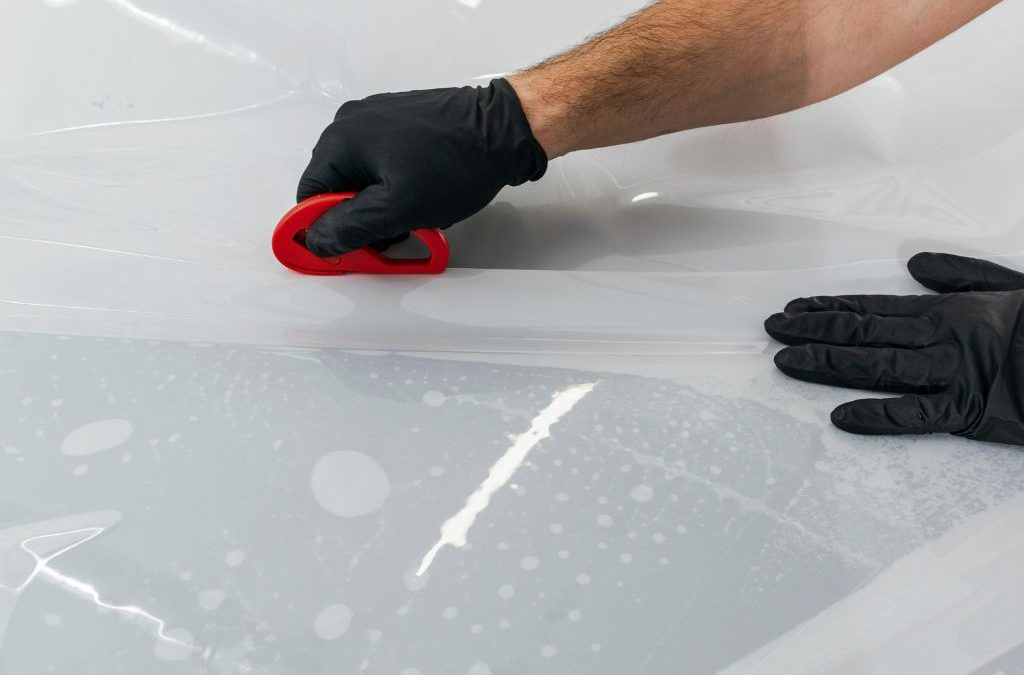
Paint protection film is a clear urethane layer applied over painted panels. It's a physical barrier: rock chips, road debris, bug acid and tree sap hit the film instead of your clear coat. Quality films are self-healing, so light swirls and wash marks close up with heat from the sun or warm water. Installed well, the edges are wrapped or tucked and the film is close to invisible.
What ceramic coating does
Ceramic coating is a liquid coating applied by hand that bonds to the paint. It adds gloss, makes the surface hydrophobic so water and dirt bead off, and protects against UV and staining. What it can't do is absorb an impact. A coating is far too thin to stop a rock chip.
PPF vs ceramic coating at a glance
| Paint protection film | Ceramic coating | |
|---|---|---|
| Stops rock chips | Yes | No |
| Self-healing | Yes, light swirls and marks | No |
| Gloss and water beading | Some films | Yes, its main job |
| Easier washing | Somewhat | Yes |
| Coverage | Panels you choose, from partial front to full vehicle | Usually the whole vehicle |
| Prep needed | Decontamination wash | Paint correction first |
When should you get both?
Getting both makes sense when you want chip protection and an easy-care finish. A common setup is PPF on the hood, fenders, bumper and mirrors, which take most of the chips, with ceramic coating on the rest of the paint. You get the impact protection where it matters and the gloss and easy washing everywhere.
Which one is right for you?
- Highway commuter, or a new or high-value vehicle: PPF on at least the front end.
- Mostly town driving, want it to look and wash better: ceramic coating.
- Want the best of both: front-end PPF plus a coating.
- Older paint with swirls: paint correction first, then a coating.
How long does each one last?
Premium paint protection film is commonly backed by manufacturer warranties of up to 10 years against yellowing, bubbling and cracking. Coating lifespan depends heavily on the product and how the vehicle is washed. Either way, ask for the warranty term on the exact product being quoted. We give you that up front.
Common myths
- "Ceramic coating is liquid PPF." It isn't. A coating is a thin bonded layer for gloss and easy cleaning, not an impact barrier.
- "PPF looks like plastic wrap." Not when it's installed properly. Edges are wrapped or tucked, and the film is close to invisible.
- "A coating means you never wash the car." You still wash it. It's just faster and gentler because dirt releases more easily.
Frequently asked questions
Does ceramic coating prevent scratches?
It helps with very light marring and makes the surface easier to clean, but it won't stop scratches or rock chips. For impact protection you need paint protection film.
Can you put ceramic coating on top of PPF?
Yes, coatings are often applied over film to add gloss and make the film easier to wash. Ask us which products we use together.
Is PPF worth it on a leased vehicle?
It can be. Film protects the original paint from chips that could cost you at lease return, and quality film removed correctly leaves the factory paint intact.
Not sure which one your vehicle needs? We'll look at how you drive and tell you what makes sense. Call (250) 549-3200 or use our contact page for a free quote. Sunshine Graphics is a family-owned shop at 4504 31st Street in Vernon, BC, serving the North Okanagan since 1990.